

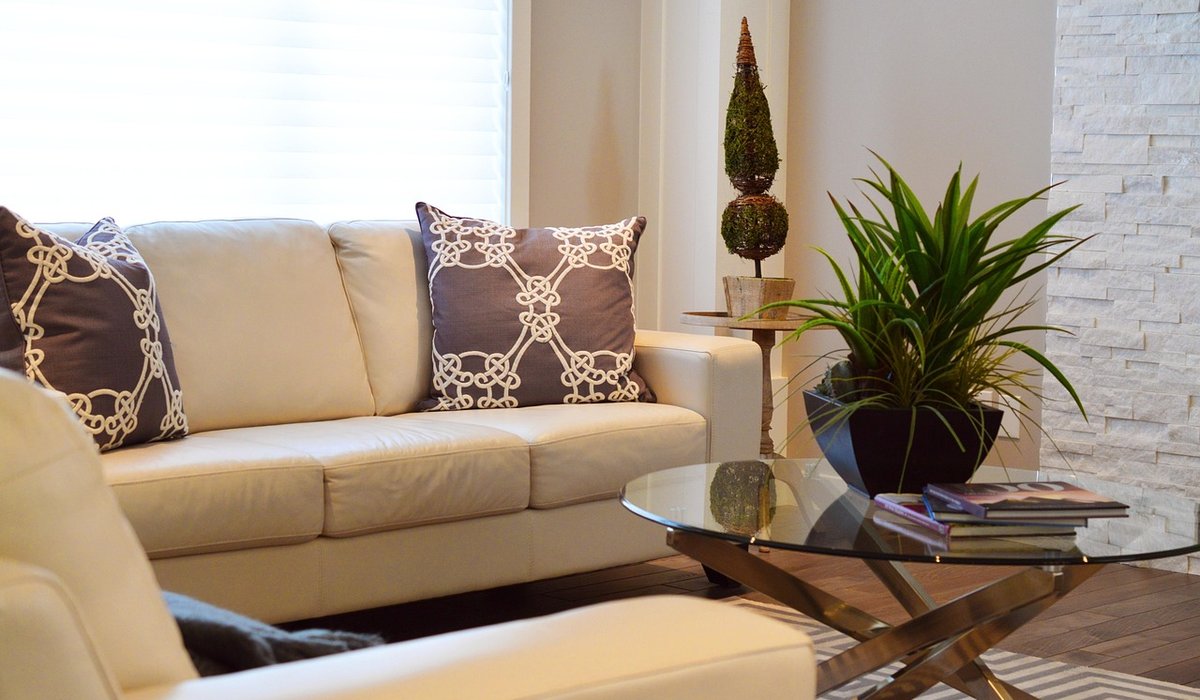
There is nothing quite like the light in a coastal sitting room, but that same light — and the salt-laden air that comes with it — is quietly working against your furnishings. Fabrics that look robust in a townhouse can be faded, brittle or mildewed within two summers by the sea. The good news is that a little forethought at the point of choosing pays you back for years. This is a practical guide to fibres, weaves and finishes that hold their own in a seaside room.
Why Coastal Rooms Are Harder on Fabric Than You Think
Four things do the damage. First, salt: airborne crystals settle into upholstery and act as a gentle abrasive, and they attract moisture, which keeps fibres damp for longer. Second, ultraviolet light: a south or west-facing window with nothing between it and the sea will bleach even a well-dyed cloth within a season or two. Third, humidity: a room that sits closed up through a damp winter is an ideal nursery for mildew, particularly in natural fillings and deep pile. Fourth, the practical traffic of coastal living — sandy feet, wet swimwear, damp towels over chair backs, and the odd gust of grit through an open window.
Think of your fabric choices as a layered defence rather than a single purchase. Whatever you choose, expect to clean it more often than you would inland.
Natural Fibres That Stand Up to Salt and Sun
Natural fibres are not automatically fragile. Several are excellent in coastal settings, provided you accept their character.
- Linen. Long flax fibres resist pilling and surface abrasion, and linen actually improves with washing. It creases, and you must live with that. A mid-weight linen in a tight weave is one of the best choices for loose covers and curtains.
- Wool. Wool's natural lanolin helps it shrug off damp, and it resists mildew better than cotton. It is also naturally flame-resistant, which matters in a room with an open fire. Choose a firm, tightly woven wool or a wool-rich blend for sofa upholstery.
- Cotton. Reliable and washable, especially in a heavy canvas or drill. Bear in mind that untreated cotton holds damp, so it suits removable covers you can launder rather than fixed upholstery.
- Hemp. Similar in handle to linen but stronger and more resistant to rot. It is a sensible choice for blinds and hard-wearing seat pads.
- Jute, sisal and seagrass. Excellent for floors. Seagrass tolerates humidity best; sisal and jute are more moisture-sensitive, so keep them out of bathrooms and off constantly damp floors. A flatweave wool rug over a hard floor is often the more forgiving option.
Weaves and Finishes That Earn Their Keep
Construction matters as much as fibre. A tight, dense weave with a firm hand will shed sand and resist snagging far better than a loose, slubby one.
- Look for plain weave, twill, herringbone and basketweave — all close-knit structures with few places for grit to lodge.
- Avoid chenille, bouclé and long, loopy textures on seating. They feel wonderful and trap sand like a sieve.
- Choose removable covers with hidden zips and seams that are double-stitched. Pre-shrunk, machine-washable covers are worth any premium.
- For anything left outdoors, specify solution-dyed acrylic. The pigment is added to the fibre rather than applied to the surface, so it resists fading and salt remarkably well.
- Line your curtains, or choose a lined blind, to protect the face fabric from direct sun.
Colour and Pattern: Choosing Wisely for a Salty Climate
Pale, sun-bleached shades are the coastal cliché, and they are also among the least practical. Very light fabrics show every sandy footprint and every mark; very dark fabrics show a bloom of dried salt and dust. Mid-tones are the sweet spot: oatmeal, faded denim blue, sage, warm grey, soft terracotta.
Pattern is your ally. Stripes, ticking, small-scale checks and simple block prints disguise the everyday wear that plain cloth advertises. Solution-dyed yarns and fibre-reactive dyes hold colour better than surface-printed cloth, so ask how the colour was applied. One caution: strong indigo and dark navy can crock onto pale upholstery and white woodwork, so test before you commit to a deep-dyed throw over a cream sofa.
Practical Upkeep Through the Seasons
Good habits extend the life of coastal furnishings considerably.
- Vacuum upholstery and curtains every week or two with a brush attachment to lift salt and grit before it works into the weave.
- Wash removable covers at 30°C with a gentle detergent and no fabric softener, which leaves a residue that attracts damp and dirt. Line dry out of direct sun.
- Blot spills rather than rubbing, and rinse sandy covers before washing so the grit does not abrade the drum or the fabric.
- Rotate and plump cushions regularly, and bring them indoors — or store them in a breathable cotton bag — through the wettest months.
- Keep a stack of washable throws and a couple of loose covers to hand for wet swimmers and muddy dogs.
Where to Spend and Where to Save
Put your money into the pieces that take the most punishment: the main sofa, the rug and the curtains that face the sea. A well-made wool or linen-blend sofa with washable covers will outlast three cheap ones. Save on accent cushions and lampshades, where a change of colour every few years keeps the room feeling fresh without guilt. Buy the best you can for the hard-working layers, keep the changeable layers inexpensive — and your seaside sitting room will still look inviting when the tenth summer arrives.


Coding is used in almost all aspects of life and work now, be it directly or indirectly. It’s not just for companies in the tech sector. “An increasing number of businesses rely on computer code,
Coding is used in almost all aspects of life and work now, be it directly or indirectly. It’s not just for companies in the tech sector. “An increasing number of businesses rely on computer code,
Coding is used in almost all aspects of life and work now, be it directly or indirectly. It’s not just for companies in the tech sector. “An increasing number of businesses rely on computer code,